
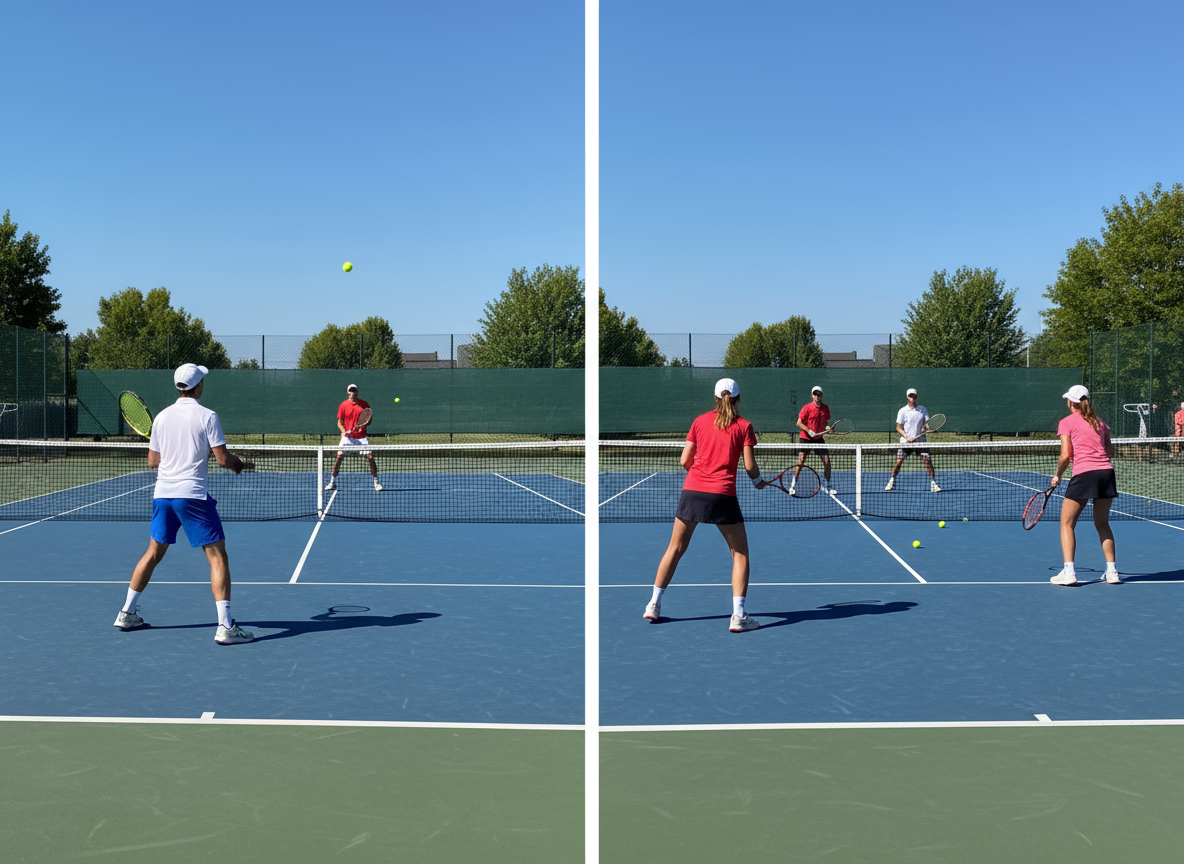
Singles vs. Doubles: Which One Matches Your Playing Style?
In the debate of singles vs doubles tennis, both formats offer distinct benefits and trade-offs. Some players thrive on the endurance and autonomy of singles, while others flourish in the fast, strategic teamwork of doubles. This guide helps you compare both side-by-side so you can pick the format that best suits your goals, fitness level, and personality.
Table of Contents
The Case for Singles: The Ultimate Test of Independence
Singles tennis is the purest one-on-one battle: every shot, decision, and outcome depends on you. Players who prefer autonomy, fitness challenges, and strategic shot placement often favor singles.
Why Players Love Singles
Complete control — Decisions are yours; you set the tempo and tactics.
Full-body workout — Singles builds stamina, court speed, and endurance.
Mental toughness — You learn to manage pressure and bounce back solo.
The Challenges of Singles
Physically taxing — Longer rallies and more court to cover.
Lonely — No immediate teammate support during slumps.
Pressure overload — Mistakes feel amplified because it’s all on you.
Best for: Players who enjoy self-reliance, endurance training, and one-on-one tactical battles.
The Case for Doubles: Tennis as a Team Sport
Doubles emphasizes coordination, communication, and net play. Partners share responsibilities, create dynamic formations, and enjoy faster exchanges. Doubles is often social, strategic, and lightning-quick at the net.
Why Players Love Doubles
Shared responsibility — Less pressure per player, more collaboration.
Fast-paced tactics — Net play, poaching, and angles define points.
Social vibe — Great for club nights, leagues, and friends.
The Challenges of Doubles
Partner dynamics — Chemistry is essential; poor communication costs points.
Less fitness intensity — Not as demanding for cardio as singles.
Shared blame — Errors can affect both players emotionally and strategically.
Best for: Players who value tactical teamwork, quick reflexes, and social play.
Two-Column Comparison: Singles vs Doubles
Here’s a quick, side-by-side look so you can compare the most important differences at a glance.
Singles — Strengths
- High cardio and stamina gains
- Develops shot tolerance and consistency
- Improves tactical court positioning and movement
- Ideal for players who love independence
Doubles — Strengths
- Enhances volleying and net play
- Builds communication and split-second decision making
- Shorter, explosive points—good for reflex training
- Perfect for social leagues and team competitions
Singles — Considerations
- Higher injury risk from overuse if not conditioned properly
- Requires strong recovery and endurance programming
- Mental resilience training is crucial
Doubles — Considerations
- Finding a consistent partner can be challenging
- Sometimes less comprehensive fitness benefits
- Team dynamics require conflict management skills
Ideal Training Focus (Singles)
- Endurance & court coverage drills
- Baseline consistency & footwork ladders
- Mental strategies (pressure handling, point-by-point focus)
Ideal Training Focus (Doubles)
- Volley combinations & serve-and-volley practice
- Communication & formation drills (I-formation, Australian)
- Poaching timing & angled returns
Quick Quiz: Are You a Singles or Doubles Player?
Answer these three prompts. Mostly A → Singles, Mostly B → Doubles, Mix → Play both.
- How do you handle pressure?
A. I like being fully in control.
B. I prefer sharing responsibility. - What excites you most on court?
A. Long rallies and tactical depth.
B. Net play and quick teamwork points. - How would teammates describe you?
A. Independent and determined.
B. Communicative and supportive.
Result suggestions: Mostly A → focus singles-specific conditioning and match play. Mostly B → work on partner drills and net play. Mixed → mix training blocks between both formats to stay versatile.
How Athlos Tennis Can Help You Discover Your Style
Athlos Tennis offers tailored programs across New York and New Jersey that help players explore both singles and doubles. We build fitness, strategy, and mental skills specific to each format.
Want to refine your mental approach? See our Top 5 Mental Strategies guide (recommended) — great companion reading for singles players.
FAQs: Singles vs Doubles Tennis
1. Which is better for beginners — singles or doubles?
For most beginners, doubles is an easier and more social entry point because there’s less court to cover and a partner to support decision-making. Singles is excellent for building endurance and shot tolerance.
2. Can playing doubles help my singles game?
Absolutely — doubles sharpens volleys, reflexes, and net positioning which translate to better all-court skills in singles. Many players use doubles to improve touch and reaction time.
3. How should I train differently for singles vs doubles?
Singles training emphasizes endurance, baseline consistency, and point construction. Doubles training focuses on serve-and-volley patterns, partner drills, and communication exercises.
4. Is it hard to switch between formats?
Not usually. Many players alternate formats in club seasons. The key is adjusting mindset — singles requires more solo decision-making; doubles asks for coordination and quick net reactions.