
Footwork Fundamentals: How to Improve Your Speed and Court Coverage
Table of Contents
How to Improve Your Speed and Court Coverage?
In tennis, power and precision get the spotlight—but footwork is what makes them possible. Whether you’re returning a blazing serve, charging the net, or recovering after a long rally, your ability to move efficiently across the court determines how well you can execute every shot.
At Athlos Tennis, we believe that great footwork is the foundation of every great player. It’s not just about running faster—it’s about moving smarter. Let’s dive into how you can refine your footwork, improve agility, and dominate the court from the ground up.
Why Footwork Matters More Than You Think
Every shot in tennis starts from your feet. Strong footwork gives you balance, timing, and control—all essential for accuracy and consistency.
Good footwork helps you:
- Get into position early for cleaner, more controlled shots.
- Recover faster after each rally or serve.
- Stay balanced even under pressure.
- Reduce fatigue and prevent injury.
In short, the best movers often control the match—even before the ball is hit.
1. The Basics: Stay Light and Ready
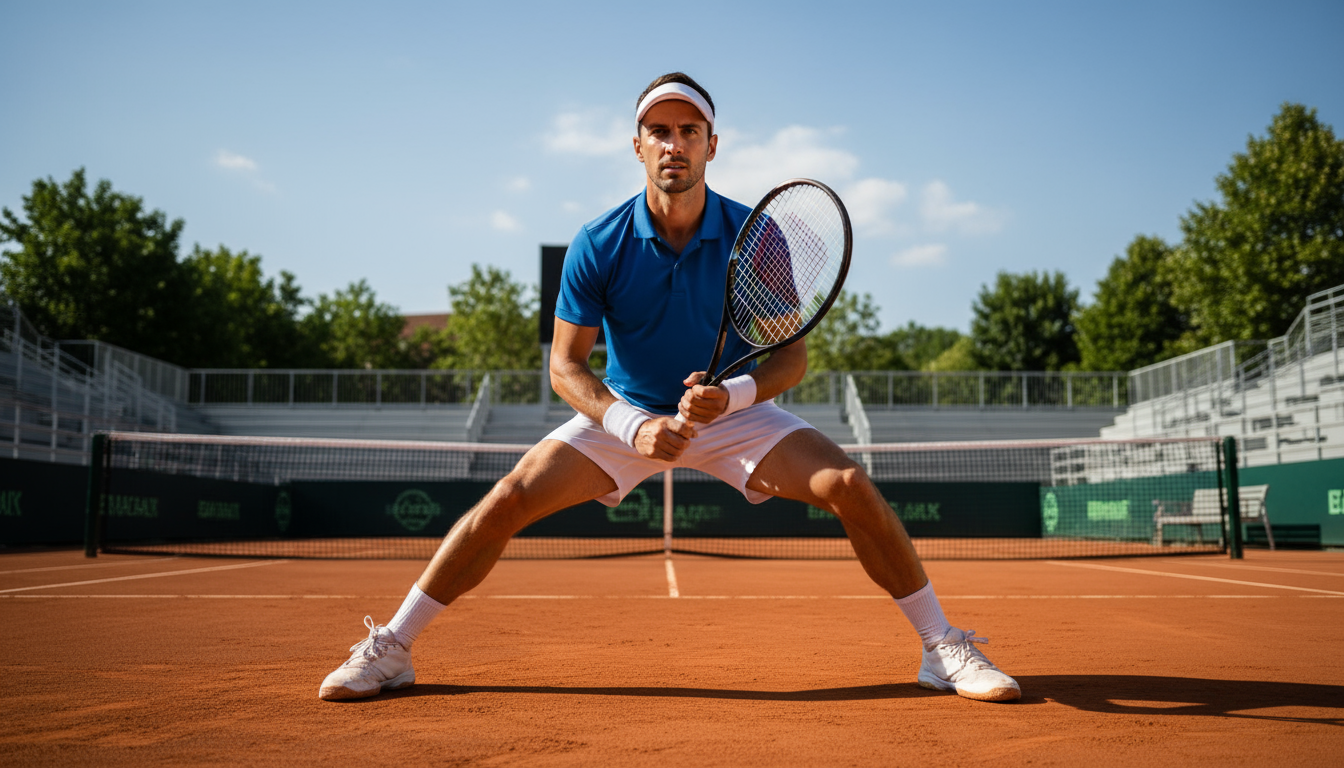
It all begins with your stance. A good ready position sets you up to move in any direction at any time.
Tips to Master the Ready Position:
- Keep your knees slightly bent and feet shoulder-width apart.
- Stay on the balls of your feet—never flat-footed.
- Keep your weight balanced and your upper body relaxed.
- Use a small, rhythmic bounce (split step) before your opponent hits.
The split step is your launchpad. It keeps you reactive and helps you explode toward the ball.
2. The Split Step: Timing is Everything
The split step is one of the most underrated yet powerful tools in tennis footwork. Executed just as your opponent strikes the ball, it gives you the momentum to move instantly in any direction.
Try This Drill:
- Stand in your ready position.
- Have a partner or coach say “hit.”
- As soon as you hear it, do a quick hop (split step) and move in the direction of the imaginary ball.
- Repeat until the timing feels natural.
Do this consistently, and you’ll find yourself reacting faster and arriving to every shot a step ahead.
3. Improve Lateral Movement and Agility
Tennis is a side-to-side game. Improving lateral speed helps you cover wide shots without losing balance.
Agility Drills to Try:
- Side Shuffles: Move quickly from sideline to sideline, maintaining your stance.
- Cone Zigzags: Place cones in a zigzag pattern and sprint through them while staying low.
- Resistance Band Steps: Attach a resistance band around your ankles and take controlled side steps to strengthen your hip muscles.
Consistency is key—practice these drills a few times a week to build quickness and endurance.
4. Master Recovery Steps
After hitting the ball, recovery footwork gets you back in position for the next shot. This is where many players lose valuable time and court coverage.
Pro Tip: Don’t admire your shot—recover instantly. After every stroke, use small, efficient steps to return to your ready position, ideally near the center mark (in singles) or at the best coverage angle (in doubles).
5. Build Endurance for Long Matches
Speed means little without stamina. Tennis footwork is all about sustained energy and smart recovery.
Conditioning Exercises:
- Jump rope for 2–3 minutes to build coordination.
- Do short sprints (10–15 meters) to simulate rally bursts.
- Include ladder drills for rhythm and control.
- Try interval running to improve cardiovascular endurance.
Remember: good footwork isn’t just fast—it’s consistent from the first to the final set.
6. Mental Awareness and Court Positioning
Physical speed alone isn’t enough—you also need mental quickness. Great players anticipate where the next shot is going before it’s hit.
How to Sharpen Awareness:
- Watch your opponent’s shoulders and racket angle.
- Learn to read shot patterns.
- Visualize possible plays during practice rallies.
By anticipating early, your feet will move instinctively, and your game will feel smoother and more controlled.
At Athlos Tennis, Movement Meets Mastery
At Athlos Tennis, we help players develop not just technical precision, but also movement mastery. Our programs in New York and New Jersey combine professional coaching with personalized agility training—helping you move faster, play smarter, and conserve energy throughout your matches.
Because great tennis isn’t just about hitting—it’s about getting there in time to hit your best shot.